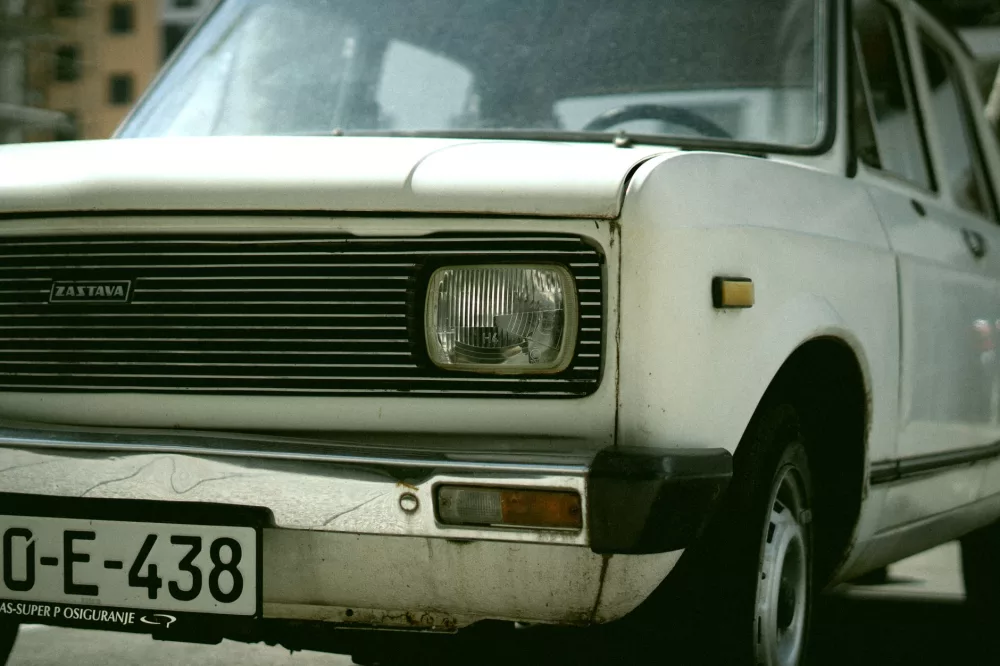
The Yugo: More Than Just a Punchline – An Unforgettable Automotive Saga
When you hear the name “Yugo,” what's the first thing that springs to mind? For many, I bet it’s a chuckle, maybe a cringe, or perhaps even a joke about its notorious unreliability. We often remember the Yugo as a punchline, a symbol of automotive failure, but I think that does a disservice to its truly fascinating, complex story. It wasn't just a bad car; it was a product of its time, a bold marketing gamble, and a poignant marker of geopolitical shifts. Let's really dig into what made the Yugo what it was, warts and all.
Humble Beginnings: From Yugoslavia to America's Shores
Our story starts not in Detroit or Tokyo, but in Kragujevac, Yugoslavia, with a company called Zastava. For decades, Zastava had been building cars under license from Fiat, churning out models that were essentially rebadged versions of popular Italian designs. They had a solid, if unspectacular, reputation in Eastern Europe. The Yugo itself, originally known as the Zastava Koral, was an evolution of the Fiat 127 platform. It was designed to be simple, affordable transportation for the working class, a straightforward little hatchback with modest ambitions. And for what it was intended, it actually did a pretty decent job in its home market. It was cheap, easy to fix, and got people from A to B. What more could you ask for in an economy still developing?
Then came Malcolm Bricklin. Now, if you know anything about the auto industry, Bricklin is a name that commands attention. This is the man who brought Subaru to America, and later tried to launch his own gull-winged Bricklin SV-1. He was an entrepreneur, a visionary, and some might say, a bit of a maverick. In the mid-1980s, Bricklin saw an opportunity. The American market was hungry for an ultra-cheap car, something even more affordable than the entry-level Japanese models. He believed the Yugo could fill that void. And I tell you, it was a audacious idea.
The Grand Entrance: A Car for the Masses (or So They Hoped)
Bricklin's plan was simple: import the Zastava Koral, rebrand it as the Yugo GV (for 'Great Value'), and sell it for an unbelievably low price – just $3,990 in 1985. Think about that for a second. That was an almost unheard-of price point for a new car in the U.S. at the time. It was marketed as a second car, a college car, a commuter car; basically, something for anyone who needed wheels but didn't have much cash. And for a little while, it actually worked! People were genuinely curious, lining up to see this incredibly cheap new arrival.
When it first rolled onto American streets, what did buyers actually get? Well, it was a minimalist experience, to put it mildly. We're talking a 1.1-liter, four-cylinder engine producing a rather underwhelming 55 horsepower. That's not a typo, I promise. It had a four-speed manual transmission, a basic radio, and not much else in terms of creature comforts. Power steering? Anti-lock brakes? Airbags? Forget about it. These weren't just optional extras; they often weren't even available. It was truly back to basics, a rolling statement against automotive excess.
- Engine: 1.1-liter, 55 hp (seriously)
- Transmission: 4-speed manual (mostly)
- Interior: Sparsely appointed, lots of hard plastics
- Safety: Minimal by modern standards
- Price: The main selling point, an incredible $3,990
I remember seeing one of these as a kid, and it just looked… different. Smaller, boxier, and clearly built to a budget. But its affordability was a powerful lure in an era where Japanese imports were getting more expensive and American cars were often inefficient. The Yugo was positioned as the ultimate disposable car, an appliance to get you where you needed to go.
The Reputation Problem: When Cheap Becomes Costly
Ah, but then reality set in. The Yugo's incredibly low price came at a cost, and I'm not just talking about the car itself. Its build quality was, let’s be charitable, inconsistent. Owners quickly started reporting all sorts of issues. Things like:
- Windshield wipers that would fly off in the rain
- Engines that would overheat or seize up
- Electrical systems prone to bizarre malfunctions
- Head gaskets failing with alarming regularity
- Rust appearing far too quickly
I’ve heard stories from mechanics of seeing Yugos on flatbeds coming into the shop with barely any miles on them. There's a famous anecdote about a Yugo whose rear-window defroster was simply a sticker that read